• What is a “good” cadence? Is 180 really the magic number?
• Should I try to change mine at all?
• Will a higher cadence make me faster – or
• just more tired?
• Can it help with my knee, hip or shin pain?
• And how do I change it without feeling like a robot?
Cadence is simply the number of steps you take per minute (spm) – both feet counted.
The easiest way to check it: run at your normal easy pace, count how many times your right foot lands in 30 seconds, and multiply by 4. Or just look at your running watch – most of them show it already.
Your running speed is the result of two things:
Speed = cadence × step length
To run faster, you can take longer steps, quicker steps, or a bit of both. The trouble is that many runners reach for longer steps first – and that is often where problems begin.
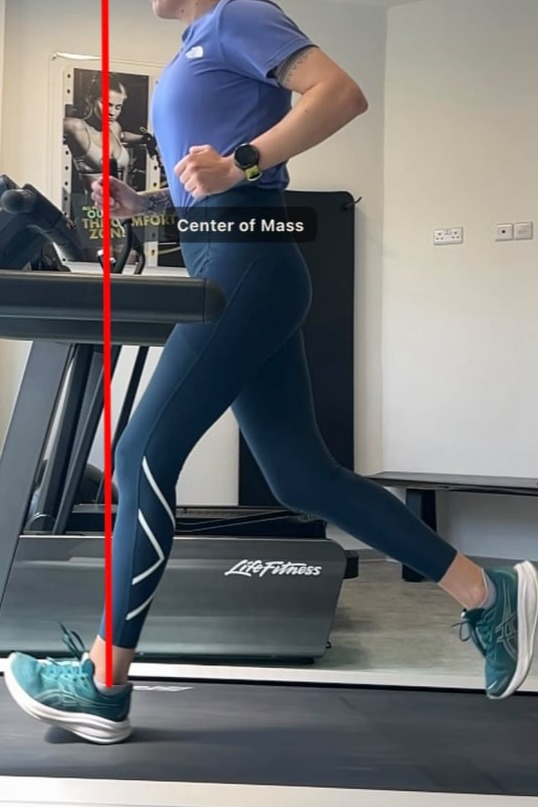
When your steps get too long, your foot tends to land far in front of your body. Think of it as hitting the brakes with every step.
A lower cadence at a given speed often goes hand in hand with this. In practice, when I look at a runner’s video in gait analysis, I’m always interested in where the foot lands relative to the hips – and cadence is one of the quickest clues.
But let’s see what the research says.
Overstrider Runner
One of the best-known studies comes from Heiderscheit and colleagues. They tested 45 recreational runners on a treadmill at a constant speed, with their step rate at their preferred level, and 5% and 10% above and below it.
The results were pretty interesting:
🔺 Increasing step rate by just 5–10% reduced the load on the knee. At +10%, the hip absorbed less energy too.
🔻 Decreasing step rate by 10% did the opposite – all the joints (hip, knee and ankle) absorbed substantially more energy.
A follow-up study looked specifically at the patellofemoral joint – the joint behind the kneecap, the one behind “runner’s knee”. Increasing step rate by 10% reduced the peak patellofemoral joint force by about 14%.
And there is a trade-off worth knowing about: the same research showed that muscle activity goes up in the late swing phase – the hamstrings and rectus femoris work harder when you take quicker steps. In other words, a higher cadence doesn’t make running free. It shifts the demand from the joints to the muscles.
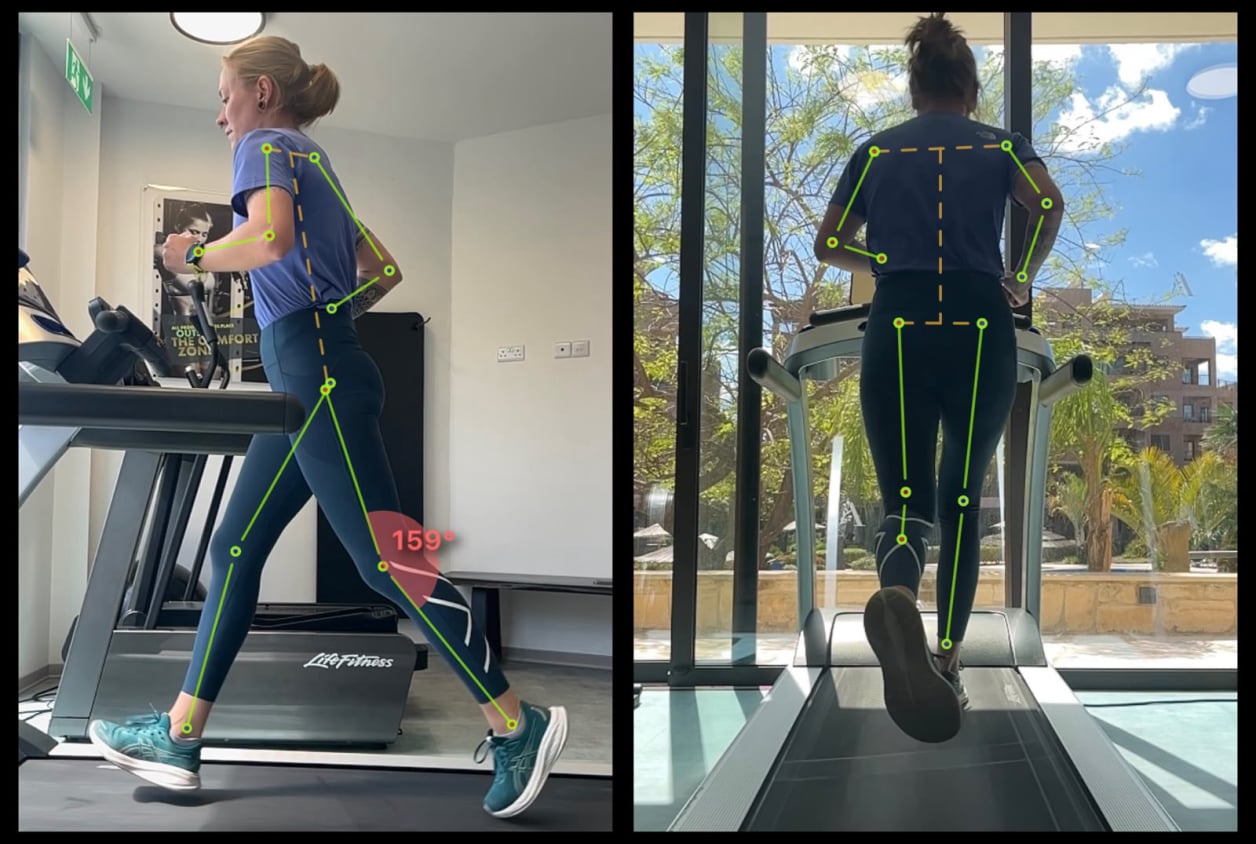
Good question – a lab result means little if you can’t reproduce it on the road.
In a 6-week study, runners were asked to run at least half of their miles at a cadence 10% higher than their baseline. They didn’t quite reach a full 10% increase, but their cadence did increase significantly. And the changes carried over into their normal running: less pronounced heel strike, less inward drop of the thigh, and a lower vertical loading rate.
Just as important: running efficiency was not significantly different. So the benefits didn’t come at the cost of feeling slower or more tired.
Short answer: no.
180 is a popular rule of thumb, but your ideal cadence depends on your speed, height, leg length, fitness and running history. Your cadence on an easy jog will naturally be much lower than at 5K race pace.
The studies above didn’t aim for a universal number either. They changed cadence relative to each runner’s own preferred rate.
So instead of asking “Am I at 180?”, ask:
What is MY cadence at my usual pace – and does a small increase make my running feel lighter, smoother and quieter?
A slightly higher cadence is worth exploring if you:
• tend to overstride or land with a heavy, loud heel strike
• deal with recurring knee pain, including runner’s knee
• have hip or IT-band-related niggles
• are returning to running after an injury
But it isn’t for everyone. If your running is already efficient and pain-free, you don’t need to chase a number. This is also a good reminder that cadence is just one piece of the puzzle, not a magic fix.
This is where small and slow wins
Expect your hamstrings and calves to notice the change at first. That’s normal, and it’s one more reason not to rush.
Remember the late swing phase? Quicker steps ask more from your hamstrings and your whole posterior chain. If you want to run at a higher cadence comfortably, strength matters.
If you haven’t read it yet, check out the article on strength training for runners to see what the research says about heavy resistance and plyometrics.
And if you’d like a structured plan, my online running-specific exercise programme on Trainerize is built exactly for this: strength, mobility and control for runners, wherever you train.
When you change how you run, your muscles have to adapt, and that can mean some extra tightness in the calves, hamstrings or hip flexors.
This is where regular sport massage or deep tissue massage can support the process
Cadence isn’t about hitting a perfect number. It’s about how your body handles each step.
Research suggests that a modest increase of 5–10% above your natural cadence can reduce the load on your knees and hips – without making running less efficient. But the right approach is individual, gradual and always paired with good strength.
The trick isn’t to copy a number from a watch. It’s to understand your running and make small, smart changes.
Stay strong, run efficiently, and stay injury-free. 💪🏃♀️
Me Time Therapy
Research
Effects of step rate manipulation on joint mechanics during running (Heiderscheit et al., Medicine & Science in Sports & Exercise): PubMed – PMID 20581720
Increasing running step rate reduces patellofemoral joint forces (Lenhart et al., Medicine & Science in Sports & Exercise): DOI 10.1249/MSS.0b013e3182a78c3a
Changes in muscle activation patterns when running step rate is increased (Chumanov et al., Gait & Posture): PMC3387288
Effects of cadence training on running biomechanics and efficiency (6-week cadence training study, Journal of Sports Sciences)
Cadence is only one part of how you move.
No Code Website Builder